BP and the North Sea: why BP wants out
BP has pumped oil and gas out of the North Sea for sixty years. So it came as a jolt when news broke that the company had been in advanced talks to sell those UK fields to a smaller rival, Ithaca Energy, in a deal worth almost £2bn. The talks collapsed in recent weeks, but BP is reportedly still looking for a buyer. The question isn't really whether BP leaves. It's why a company that practically built the basin now wants out.
The short answer: the North Sea has become a small, heavily-taxed corner of a much bigger company that is fighting for its life on several fronts at once.
It's a tiny slice of BP
"BP sells the North Sea" sounds enormous, but in production terms, it is not that significant. BP's UK fields pump about 120,000 barrels a day. The whole company pumps 2.3 million. That's roughly one barrel in twenty.
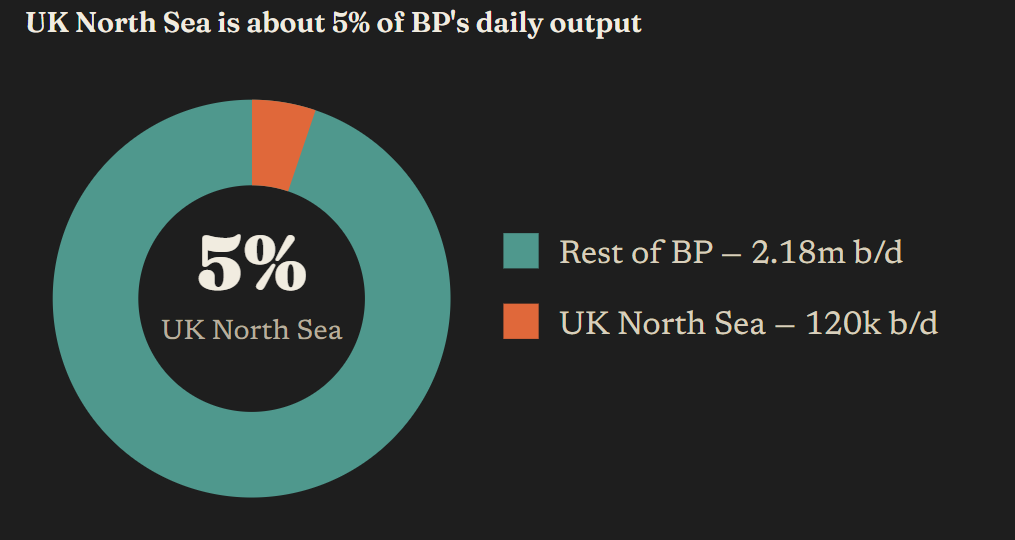
When something is both small and difficult, it's an easy thing to sell, especially when you badly need the cash.
And BP badly needs the cash
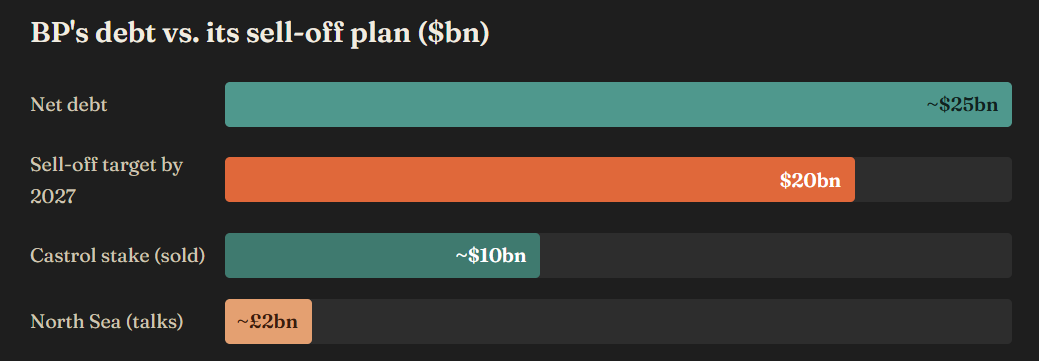
BP is carrying more than $25bn of debt and has been under pressure from the activist hedge fund Elliott Management, which built a big stake and started pushing for change. The company has promised to sell off $20bn worth of assets by 2027 to bring the debt down. It already sold most of its Castrol lubricants business. Petrol stations and renewable projects are also on the block.
On top of all this, BP is in the middle of a leadership shake-up. New chief executive Meg O'Neill arrived in April with a plan to simplify the company and refocus on plain old oil and gas. Weeks later, the chairman who hired the previous boss was himself pushed out. A company changing its leaders this fast is a company in a hurry to fix things.
The tax that's emptying the basin
Now the part that makes the North Sea genuinely hard to love. UK oil and gas profits are taxed at a headline rate of 78% - one of the toughest regimes in the world. It climbed there in steps after 2022, and the current government extended it to 2030.
The effect has been brutal. The industry says the supply chain is losing around 1,000 jobs a month, and one analysis reckons future output from the basin could fall by 40% compared with earlier hopes. Add in a ban on new exploration and some sharp public criticism of oil profits from the energy secretary, and you can see why the majors are drifting away.
So what does it mean for BP?
Selling 5% of its output won't reshape BP overnight. What it does do is tidy the books, raise cash for that $20bn target, and send a clear signal: under O'Neill, BP keeps only the assets that earn their place. Everything else is fair game.
There's one odd wrinkle. O'Neill herself recently said she saw "untapped potential" in the UK North Sea. So why sell? Because "these fields have value" and "BP is the best owner for them" are two different things. Under a 78% tax, a lean specialist like Ithaca may simply be able to pay more for them than they're worth inside a sprawling global company.
The talks have stalled. But with the tax regime unchanged, the debt still high and investors still watching the clock, BP's exit from the North Sea feels less like an if and more like a when.